
 0191 500 1154


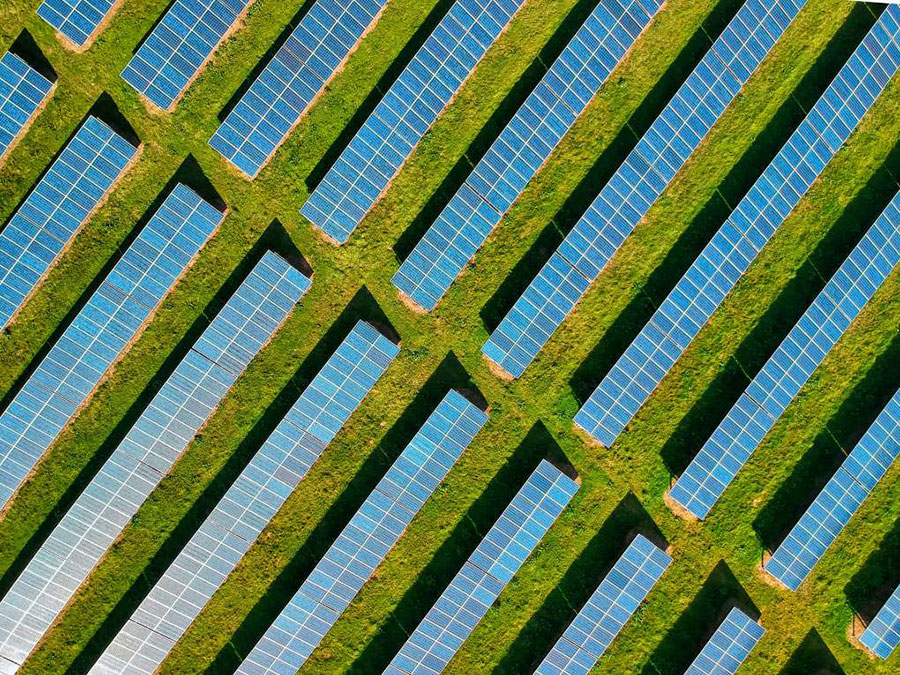
Solar panels are becoming more and more popular in the United Kingdom as people are looking for ways to reduce their carbon footprint and save money on their energy bills. This renewable energy source works by converting sunlight into electricity, which can be used to power homes and businesses.
The basic principle of a solar panel is the Photovoltaic (PV) effect. This effect was discovered and first utilized by Alexandre-Edmond Becquerel in 1839, in which he discovered how sunlight can be converted into electricity. This effect is based on the ability of certain materials used in a solar panel called semiconductors, like silicon, to absorb photons and release electrons. When a beam of light strikes the surface of a solar cell, electrons are released and begin to move around in the semiconductor. This movement of electrons creates a flow of electricity, which can be harnessed and used to power electrical devices.
Solar panels consist of multiple solar cells wired together, and are made up of several layers including a protective layer on top, a semiconductor layer, a metal layer, and a back contact layer. The protective layer on top acts as a barrier to protect the semiconductor layer from external hazards such as birds and weather elements. The semiconductor layer, which is the absorbing layer, is most commonly made up of silicon; once the photons hit this layer it creates an electric field which drives the electrons away from the atom, in a form of free flow current. The metal layer, which is located under the semiconductor layer, serves as a route to guide the electrons to an electrical circuit which is placed on the back contact layer underneath.
The electrical circuit is then connected to a wattage inverter, which is an electrical device that converts direct current (DC) into alternating current (AC). AC is the type of electrical current used by the UK mains grid, which is the main electrical distribution network in the country.
Solar panels are mounted on rooftops or on fields, tilted to face the sun at an angle that maximizes their exposure to sunlight. In the United Kingdom, there are a range of solar panel systems to choose from, ranging from rooftop solar panels to solar farms. Rooftop solar panels can be installed on homes or businesses and are a popular option for those looking to reduce their electricity bills. Solar farms, on the other hand, are large-scale installations that are designed to generate electricity for the national grid. These are typically located in rural areas where there is plenty of open space and ample sun exposure.
The UK government has set out a target to meet net-zero greenhouse gas emissions by 2050. To achieve this, solar panels are one of the many renewable energy sources being heavily promoted, and the government has provided incentives to encourage the use of solar panels. The most well-known incentive is the Feed-In Tariff (FIT) scheme, which was introduced in April 2010 and closed to new applicants in 2019. This scheme rewarded owners of solar panels for the electricity they produced and fed back into the national grid. Other incentive measures include the Smart Export Guarantee (SEG), which replaced the FIT scheme and offers owners of solar panels money for exporting their surplus electricity back into the grid.
The efficiency of solar panels is impacted by several factors, including the type of material used in the manufacturing of the panels, the angle of the panels towards the sun, weather and temperature conditions, and shading, whether due to adjacent buildings, trees or overcast weather. Most solar panels in the UK have a lifespan of up to 25 years and require little maintenance; however, periodic cleaning is recommended to maintain optimal power output.
In conclusion, solar panels work by harnessing the power of sunlight and converting it into electricity through the photovoltaic effect. They are a sustainable and renewable source of energy, and have become increasingly popular in the United Kingdom as people look for ways to reduce their carbon footprint and save money on their energy bills. The UK government has provided incentives such as the Feed-In Tariff and Smart Export Guarantee to encourage individuals and businesses to adopt renewable energy technologies. Solar panels are an excellent investment for a sustainable future and a bright, greener tomorrow.