
 0191 500 1154


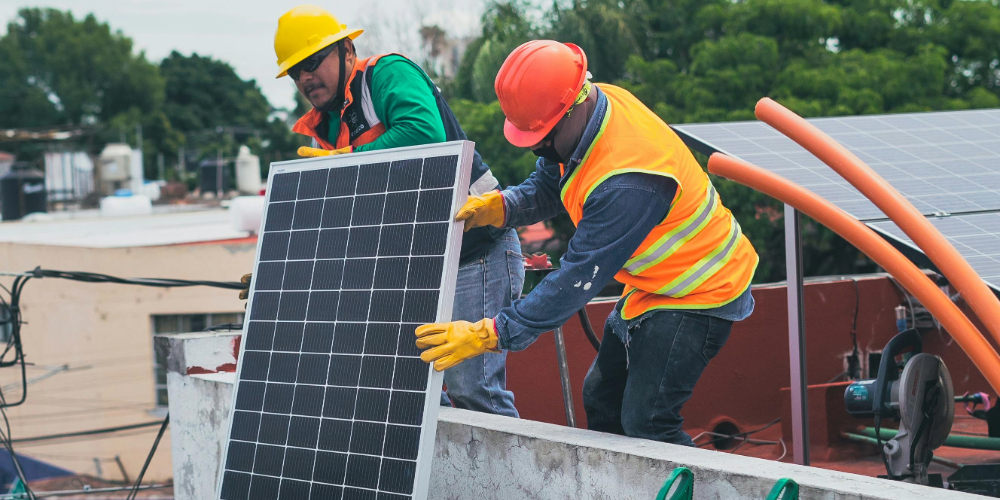
For businesses across the North East, energy costs represent a significant and increasingly unpredictable overhead. Whether you’re running a manufacturing facility in Newcastle, a retail operation in Durham, or a warehouse in Sunderland, your electricity bills are likely higher than they were a few years ago – and there’s little indication they’ll drop anytime soon.
Commercial solar installations offer a solution that’s both financially sound and strategically smart. Let’s break down exactly how solar panels pay for themselves and why now might be the perfect time for your business to invest.
The Commercial Solar Advantage
Unlike residential installations, commercial solar systems benefit from several factors that improve return on investment:
Daytime energy consumption: Most businesses operate primarily during daylight hours when solar panels generate peak power. This means you’re using the electricity you generate immediately, rather than storing or exporting it. You’re offsetting your most expensive energy usage in real-time.
Scale efficiencies: Commercial installations are typically larger, and the cost per kilowatt decreases as system size increases. A 50kW system costs proportionally less than installing five separate 10kW systems.
Enhanced Capital Allowances: Businesses can claim 100% first-year capital allowances on solar panel installations, significantly reducing the initial tax burden and improving cash flow.
Business rates exemption: Solar installations on non-domestic properties are exempt from business rates, unlike many other improvements to commercial property.
Real Numbers: What Does ROI Look Like?
Let’s consider a typical scenario for a North East business:
Medium-sized commercial property with 50kW solar installation:
- System cost: £35,000-£45,000
- Annual generation: approximately 42,500 kWh
- Business electricity rate: 25-30p per kWh
- Annual savings: £10,625-£12,750
With these figures, you’re looking at a payback period of roughly 3.5-5 years. After that, you’re generating free electricity for the remaining 20-25 year lifespan of the system.
Factor in the Enhanced Capital Allowances, and your effective first-year cost drops significantly. If your business pays corporation tax at 25%, you’re immediately recovering 25% of the installation cost through tax relief. This further shortens your payback period, often to 3-4 years.
Over 25 years, a £40,000 investment could save you £265,000-£318,000 in electricity costs at current rates. Even accounting for inflation and maintenance, the return is substantial.
Beyond Basic Savings
Price protection: Energy costs are volatile and trend upward. Locking in your own generation rate protects your business from future price shocks. Every time energy prices rise, your solar investment becomes more valuable.
Budget certainty: Businesses need to forecast costs accurately. Solar panels provide predictable energy costs for decades, making financial planning easier and more reliable.
Corporate responsibility credentials: Customers and clients increasingly care about sustainability. Solar panels are a visible commitment to reducing your carbon footprint, which can be valuable for marketing and tender applications.
Property value: Commercial properties with solar installations are more attractive to buyers and tenants. You’re investing in an asset that enhances your property’s value and marketability.
Grid independence: Paired with battery storage, solar systems can provide backup power during outages, protecting your business from lost productivity and revenue.
Which Businesses Benefit Most?
Solar works particularly well for:
Manufacturing and industrial: High daytime energy consumption aligns perfectly with solar generation. Machinery, lighting, and climate control all benefit from on-site power generation.
Retail and hospitality: Shops, restaurants, hotels, and leisure facilities operate during peak solar hours and use substantial electricity for lighting, refrigeration, and HVAC.
Warehousing and logistics: Large roof spaces provide ample area for panels, and daytime operations match generation patterns.
Offices and professional services: Consistent weekday energy use from computers, servers, lighting, and climate control creates steady demand during generation hours.
Agricultural operations: Barns, storage facilities, and processing areas often have ideal roof structures and space for ground-mounted systems.
System Sizing Considerations
The optimal system size depends on several factors:
- Your current electricity consumption patterns
- Available roof or ground space
- Roof condition and orientation
- Budget and financing options
- Future expansion plans
We typically recommend systems sized to cover 60-80% of your daytime consumption. Going larger can still be worthwhile if you have battery storage or favourable export tariffs, but the primary value comes from self-consumption.
Most commercial properties can accommodate 30-100kW systems, though we’ve installed systems ranging from 15kW for small businesses to 200kW+ for larger industrial facilities.
Adding Battery Storage
For many commercial operations, battery storage enhances the value of solar:
- Store excess generation for use outside peak production hours
- Reduce demand charges by smoothing peak consumption
- Provide backup power during outages
- Take advantage of time-of-use tariffs by charging during off-peak periods
Battery storage typically adds 30-50% to the initial investment but can improve ROI for businesses with significant evening or weekend operations.
Maintenance and Performance
Commercial solar systems are low-maintenance but benefit from regular attention:
- Annual inspections to check connections and panel condition
- Cleaning every 1-2 years (or more frequently in industrial areas)
- Monitoring system performance to identify any issues quickly
- Inverter replacement after 10-15 years (typically £2,000-£5,000)
These costs are minimal compared to the savings generated and should be factored into your financial projections at around £200-£500 annually.
Financing Options
Many businesses prefer to preserve capital. Options include:
Outright purchase: Best ROI, immediate tax benefits, full ownership from day one.
Asset finance: Spread the cost over 3-7 years while still claiming capital allowances.
Lease arrangements: Lower initial outlay with fixed monthly payments.
Power Purchase Agreements (PPAs): No upfront cost; you pay for the electricity generated at a lower rate than grid prices.
Taking the Next Step
At North East Solar, we specialise in commercial installations across Northumberland, Tyne and Wear, and County Durham. Our process includes:
- Site survey: We assess your property, energy consumption, and opportunities for optimisation.
- Financial modelling: Detailed projections showing costs, savings, and ROI based on your actual usage data.
- DNO liaison: We handle all applications and permissions with your Distribution Network Operator.
- Professional installation: MCS-certified installation with minimal disruption to your operations.
- Ongoing support: Monitoring, maintenance, and performance optimisation.
The business case for commercial solar has never been stronger. Rising energy costs, improved technology, and favourable tax treatment combine to create compelling returns for North East businesses.
Ready to explore how solar could benefit your business? Contact North East Solar for a free commercial assessment and detailed ROI analysis. Call us today or visit our website to arrange a consultation.